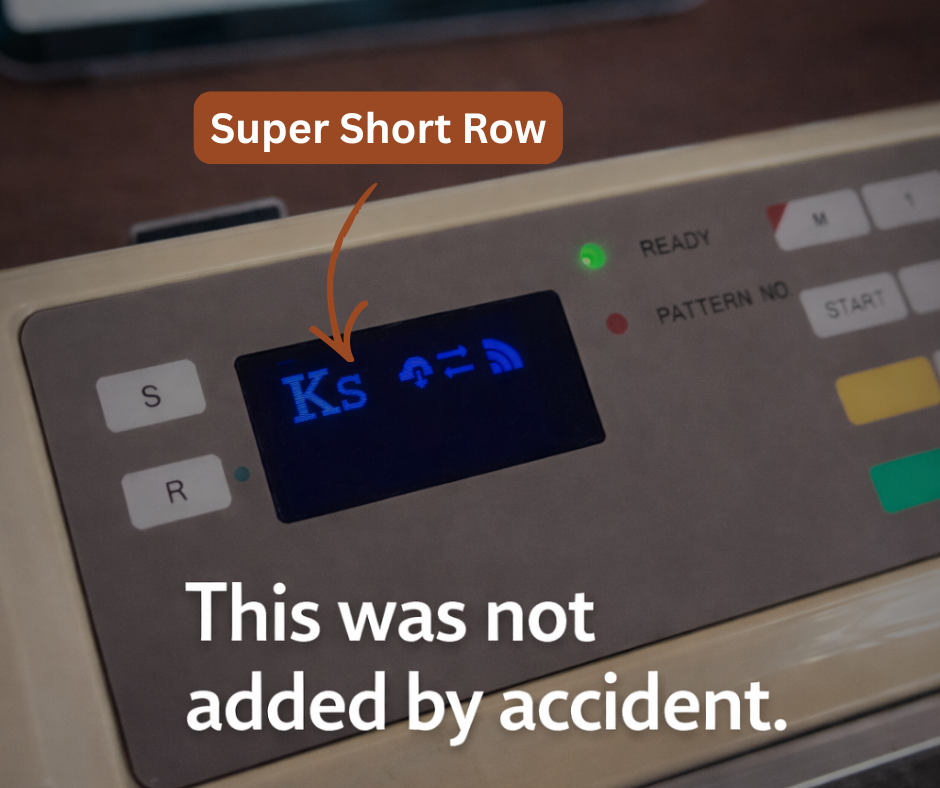
Super Short Row
Not every feature starts in software. Some start on the needles.
Super Short Row was added because a real knitting project needed a calmer, shorter movement.
Why we added it
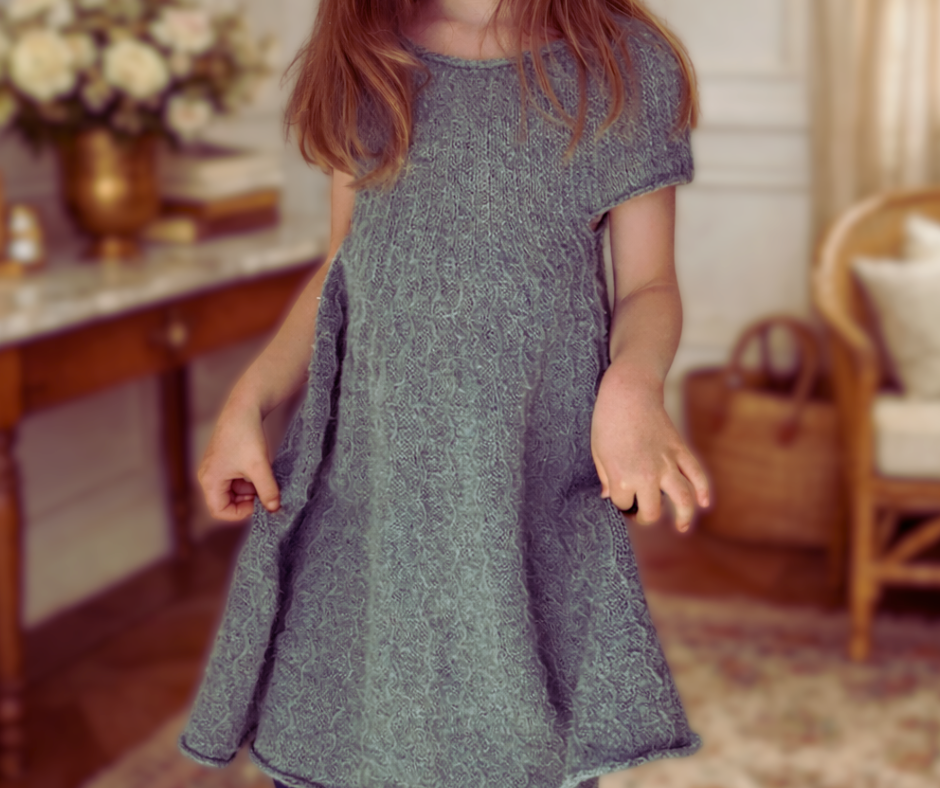
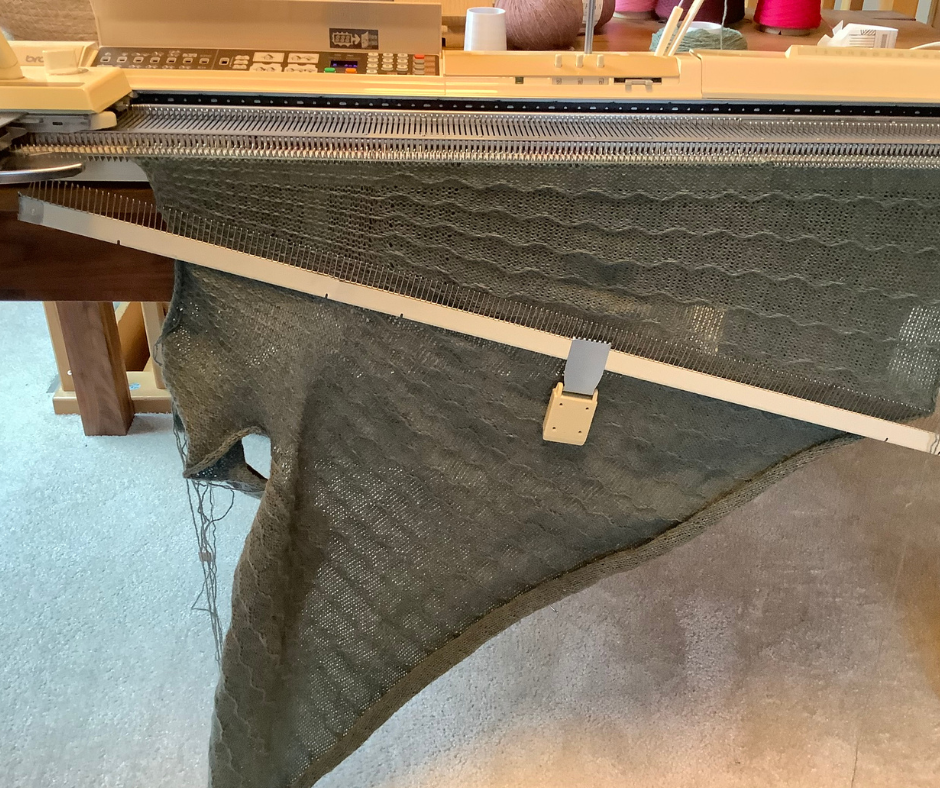
The sleeve made the problem visible.
On the original Brother machine, the next pattern row advances after the carriage passes the middle of the bed, where the mechanical row counter sits.
That classic behaviour works beautifully for many short-row projects. We call it Classic Brother short row.
But while knitting sleeves like these, the carriage had to travel back to the middle just to advance the row. That extra movement pulled the yarn away from the work and disturbed the tension.
So we added Super Short Row: a mode where the row advances immediately when you change direction.
Less travel. Less tension change. More control where shaping happens.
Especially when the knitted area is small, delicate, or far away from the middle of the machine.
Classic Brother short row
Advance after the middle.
The carriage passes the middle row counter before the pattern row advances. Familiar, stable, and still the right choice for many classic short-row projects.
Super Short Row
Advance when you turn.
The next row advances immediately when you change direction. No middle row counter pass is needed.
Use it when the project asks for it.
Super Short Row is not meant to replace the classic Brother way. Classic short row still has clear advantages and should be used for many projects.
But when shaping needs to start immediately and tension needs to stay even, Super Short Row makes a real difference.
See what eKnitter changes in real knitting.
Super Short Row is one of those small details you only notice when the project becomes more demanding. That is why eKnitter was built: to make classic Brother machines feel calmer, more flexible, and easier to use in real projects.